How Long Does It Take to Build a Website?

Co-Founder
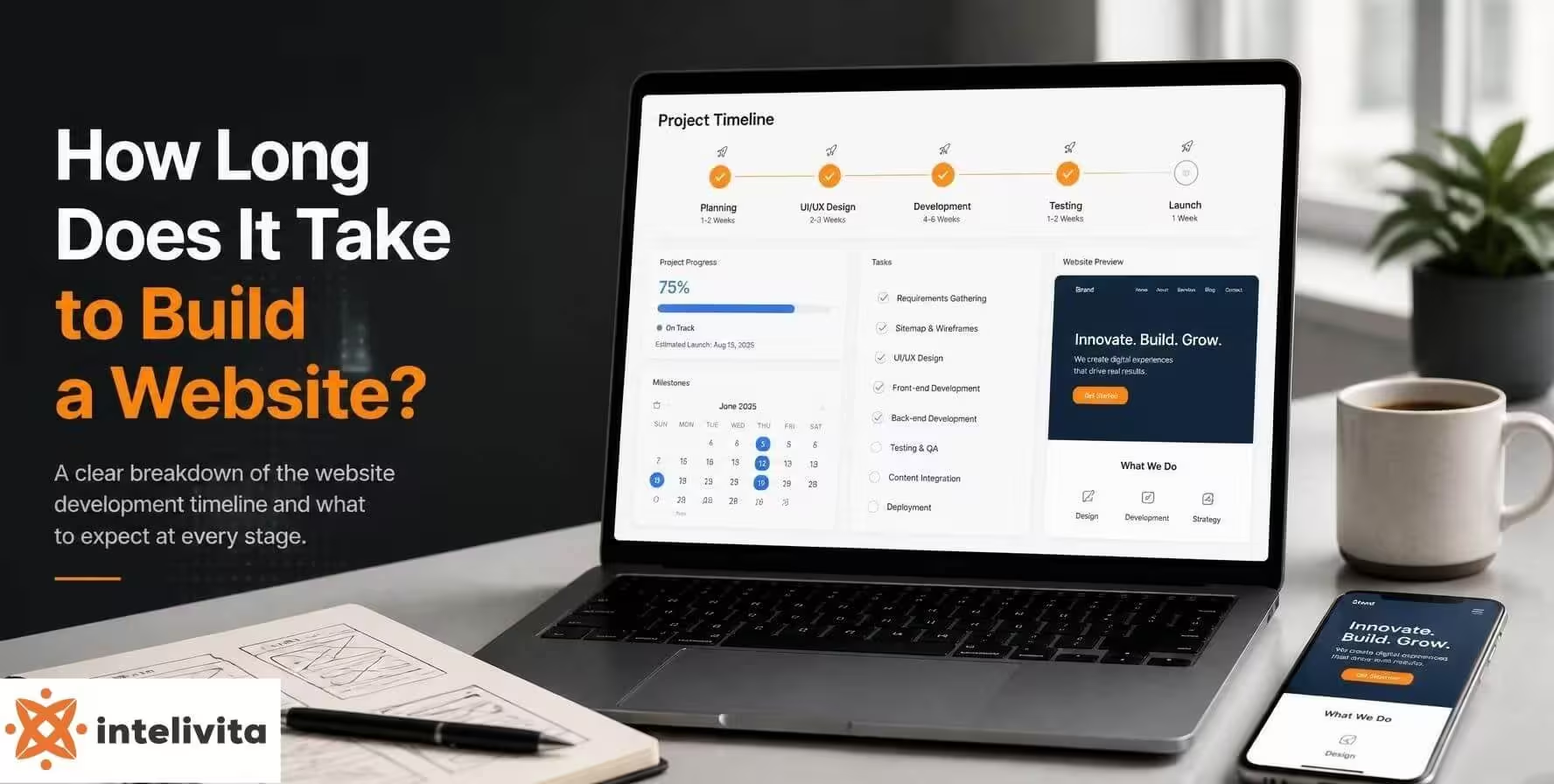
It takes 1 week to 6 months to build a website, with larger or more complex projects requiring 20 weeks or longer because custom functionality, integrations, and extensive testing increase development time in Manchester. The average time to build a website depends on project scope, page count, design complexity, and client feedback throughout the process.
Website development follows stages that include planning, design, development, and testing before launch. Each phase contributes to the time building, while project complexity, custom features, integrations, and revision cycles determine the overall schedule.
Development timelines for different website types are listed below.
- Landing Page: A single-page site takes 1 to 2 weeks when copy and visuals are ready before design begins.
- Small Business Website: A multi-page brochure site takes 4 to 8 weeks, covering discovery, design, and content population.
- Online Store: A small catalogue store takes 3 to 6 weeks through platforms like Shopify with standard product setup.
- E-Commerce Website: A custom store with payment gateways and security protocols takes 8 to 20 weeks to complete.
- Corporate Website: A larger organisational site with custom branding takes 8 to 16 weeks across multiple approval rounds.
- Custom Web Application: A custom platform with unique functionality takes 6 months or longer, depending on system complexity.
What is the Average Timeline for Website Development?
The average timeline for website development is between 6 and 12 weeks for a standard business site. Common phases include discovery, UI/UX design, front-end and back-end coding, content population, and quality assurance testing before launch.
The duration links to factors, including page count, custom feature requirements, third-party integrations, and speed of client feedback in revisions. Agencies specialising in web development map the phases into a schedule from the outset, avoiding scope creep mid-project.
How much time can a Web Development Company Save on a Website Project?
A web development company can save time on a website project through workflows, running content creation with design and development. Discovery sessions with scope, defined deliverables, and pre-approved wireframes prevent mid-project rework.
Reusable components, established CMS frameworks, and agile sprint cycles cut coding hours, while fast client feedback loops eliminate approval delays. Running the overlapping stages together, a web development company trim 20 to 50% off the standard project timeline.
What factors make some Websites more Time-Consuming to Develop?
The factors that make some websites more time-consuming to develop are listed below.
- Custom Design Requirements: Custom layouts, animations, and interactive graphics demand extra design iterations and browser testing.
- Content Management System Complexity: A CMS with custom fields and workflows extends back-end coding beyond standard template setups.
- E-Commerce Functionality: Payment gateways, inventory syncing, and shipping calculators add integration testing on multiple platforms.
- Third-Party Integrations: CRM, marketing, and analytics tools require API configuration and compatibility checks before launch.
- Number of Pages: Larger site architectures with unique layouts per page multiply design and development hours.
- Client Feedback Turnaround: Slow approval cycles on wireframes and copy stall subsequent phases from starting on schedule.
- Custom Database Structures: Dynamic content, user accounts, and search filters require additional back-end architecture and query optimisation.
- Mobile Responsiveness Demands: Complex interactive elements need extra testing cycles to function on screen sizes.
- Accessibility Compliance: Meeting WCAG standards adds development steps for screen readers, contrast ratios, and keyboard navigation.
How long does it take to Build a Landing Page?
It takes 1 to 2 weeks to build a landing page when copy and visual assets are ready ahead of design. Freelancers or agencies log 20 to 40 hours in layout, content placement, and quality assurance checks. Simple single-page builds go live within days using pre-built templates, but custom animations extend the schedule.
How long does it take to Build a Small Business Website?
It takes 4 to 8 weeks to build a small business website, covering discovery, design, development, and testing phases. Page count and revision cycles push the timeline toward the upper range for sites needing custom branding elements. Owners who want full control over the structure create a business website service that bundles hosting, domain setup, and templated design in one package.
How long does it take to Build an Online Store?
It takes 3 to 6 weeks to build an online store with a small catalogue of 10 to 50 products through Shopify. Product photography, variant setup, and shipping configuration consume more hours than the storefront design itself. Custom integrations for inventory or loyalty programmes add weeks to the build.
How long does it take to Build an E-Commerce Website?
It takes 8 to 20 weeks to build an e-commerce website when payment gateways, security protocols, and product databases require custom development. Larger catalogues and multi-currency support push timelines toward the higher bracket. Checkout testing remains non-negotiable, since rushed payment flows create post-launch fixes.
What are the Most Common Causes of Website Development Delays?
The most common causes of website development delays are listed below.
- Incomplete Content Delivery: Missing copy, images, and product data stall design and development phases from progressing on schedule.
- Scope Creep: Additional features or pages requested mid-project extend timelines beyond the original agreement.
- Slow Client Feedback: Delayed approvals on wireframes, mockups, and revisions create bottlenecks between project phases.
- Unclear Project Requirements: Vague goals in discovery lead to rework once stakeholders clarify expectations later.
- Third-Party Integration Issues: Payment gateways, APIs, and CRM connections often surface compatibility problems during testing.
- Multiple Stakeholder Approvals: Conflicting feedback from decision-makers slows consensus on design and content direction.
- Custom Feature Development: Custom functionality outside standard templates requires additional coding and quality assurance cycles.
- Inadequate Discovery Planning: Skipping research phases causes structural changes and restarts later in development.
- Phased Milestone Tracking: Project managers set clear deadlines per phase, preventing delays from cascading into later stages.
- Parallel Workflow Scheduling: Running content creation alongside design and development shortens the overall project timeline.
- Defined Approval Windows: Setting fixed feedback deadlines keeps revisions from stalling project momentum.
How does Website Complexity Impact Development Hours?
Website complexity impacts development hours through the number of custom features, integrations, and unique page templates required for a functioning build. A site with static pages needs 40 to 100 hours, while a platform with user accounts, dynamic search, and content pushes hours into the hundreds.
Interactive elements, third-party API connections, and multi-device testing each add separate development cycles that compound total build time.
How long does Website Planning take?
Website planning takes 1 to 4 weeks, covering audience research, sitemap creation, and technical requirement gathering before design begins. The phase establishes the project scope, defines page structure, and secures the client's sign-off on deliverables to prevent revisions later.
A planning stage keeps subsequent design and development phases on schedule, since teams work from an approved roadmapinstead of shifting requirements.
Why is Project Planning Important for Website Development?
Project planning is important for website development because it sets a shared understanding of budget, timeline, and feature priorities between the client and development team. Skipping the step leads to feature disputes mid-build, where the client assumed different outcomes were included in the original quote. A well-documented plan gives developers a reference point for scope disputes, keeping billable hours tied to agreed deliverables rather than open-ended requests.
How long does it take to Design a Website?
It takes 2 to 4 weeks to design a website, covering wireframing, UI mockups, and revision cycles based on client feedback. The stage transforms rough sketches into visual layouts, defining colour schemes, typography, and page structure before development starts.
Custom branding elements and multiple client reviews extend the schedule, so agencies offering web design services build buffer time into the quoted timeline.
Why do Custom Websites take longer than Template-Based Websites?
Custom websites take longer than template-based websites because developers build UI components, custom CSS, and unique back-end logic from a blank codebase instead of configuring a pre-built theme.
Template builds rely on frameworks with pre-tested markup, letting teams skip wireframing and cross-browser QA cycles that custom projects require. Custom builds demand additional sprints for responsive breakpoints and API integrations, since no boilerplate exists to shortcut the development stack.
How long does Front-End Development take?
Front-end development takes 3 to 8 weeks, depending on the number of templates, responsive breakpoints, and JavaScript interactions coded into the interface. The development stage converts mockups into markup, handling HTML and client-side scripting to render layouts in browsers and devices.
Component reusability, framework choice, and accessibility compliance testing all shape the schedule. Teams handling front-end web development scope extra sprints for cross-browser debugging and DOM optimisation.
Why do Interactive Websites Require More Development Time?
Interactive websites require more development time because each user action (hover effect or form validation) needs its own event listener and logic branch coded and debugged individually. Third-party libraries for maps, chatbots, or carousels require configuration and version compatibility checks that static pages never encounter.
Accessibility standards apply differently to interactive elements, so developers run extra keyboard-navigation and screen-reader tests before signing off on each component.
Can Front-End Frameworks Speed Up Development?
Yes, front-end frameworks speed up development by providing pre-built components, standardised syntax, and reusable code libraries that eliminate writing markup from scratch. React, Vue, and Angular handle state management and DOM updates automatically, cutting down manual debugging for interfaces.
Architecture lets developers reuse buttons, forms, and navigation menus in multiple pages without duplicating code. Teams adopting modern web development frameworks shorten build cycles while maintaining design patterns throughout the project.
How long does Back-End Development take?
Back-end development takes 4 to 8 weeks, covering server configuration, database architecture, API endpoints, and authentication logic that power the site's functionality.
The stage handles data storage, logic, and security protocols behind the user interface, connecting forms and content to a server. Database schema complexity, third-party integrations, and projects needing backend web development allocate extra sprints for load testing and query optimisation.
What Factors Influence Back-End Development Timelines?
The factors that influence back-end development timelines are listed below.
- Database Schema Complexity: Multiple tables, relationships, and normalisation requirements extend the time needed for structuring data correctly.
- API Integration Requirements: Connecting third-party services like payment gateways or CRMs demands compatibility testing before deployment.
- Authentication and Authorisation Logic: User roles, permissions, and login security protocols add coding and testing cycles beyond basic setup.
- Server Configuration: Choosing between cloud hosting, VPS, or servers affects deployment speed and scalability planning.
- Data Security Compliance: Encryption standards and regulatory requirements like GDPR extend testing before launch approval.
- Scalability Requirements: Building infrastructure to handle high traffic volumes requires additional architecture planning and load testing.
- Custom Business Logic: Unique workflows, calculations, or automation rules require bespoke coding beyond standard CRUD operations.
- Legacy System Integration: Connecting new back-end infrastructure to existing platforms surfaces compatibility issues mid-project.
Why do Database-Driven Websites take longer to Build?
Database-driven websites take longer to build because a site requires custom schema design, query optimisation, and data validation beyond static markup. Developers structure relational tables, define indexing rules, and test data retrieval speed under varying load conditions before launch.
Search filters, user accounts, and content management systems all pull from the database layer, adding coding and testing cycles that static pages never need.
When Should Back-End Functionality Be Developed?
Back-end functionality should be developed after front-end wireframes and design mockups receive client approval, once the required data structure is clear.
Building the server logic and database schema too early risks rework if the interface design shifts feature requirements mid-project. Running back-end coding with front-end development, once scopes are locked, keeps integration testing on schedule near launch.
Never Miss an Update From Us!
Sign up now and get notified when we publish a new article!


 India
India
514, Silver Radiance 2, Science City Rd, Nr. Shakti Arcade, Sola, Ahmedabad, Gujarat